




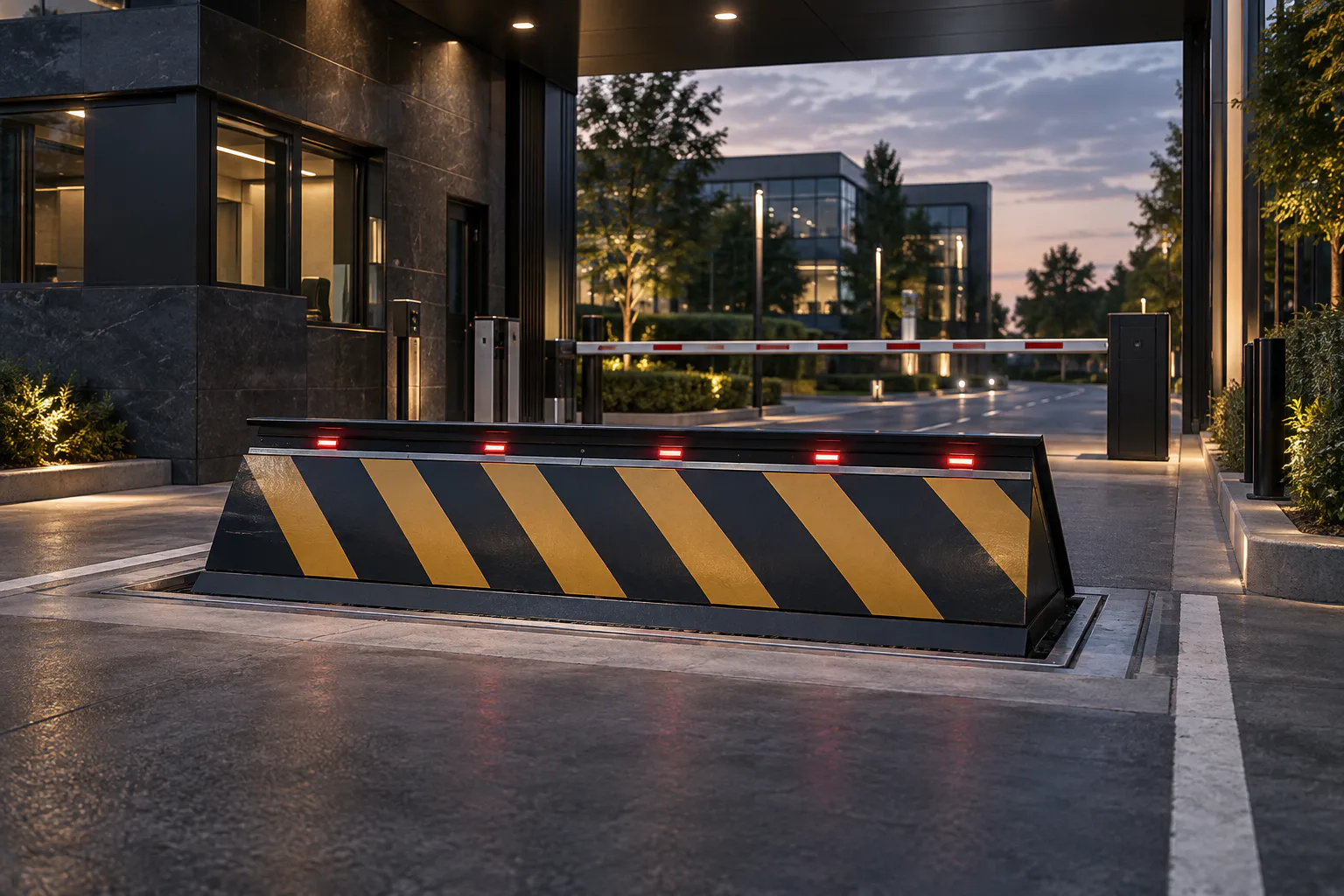

A road blocker is a security barrier installed flush with the ground that rises hydraulically or mechanically on command to physically stop vehicles. Safe, long-lasting operation depends on infrastructure planned before installation.
1. Ground and excavation
The road blocker body works embedded in the ground. Excavation depth and foundation must be designed for the chosen model. Shallow-mount telescopic models are preferred where excavation depth is limited.
2. Drainage
Water collecting inside the body shortens the life of hydraulic and mechanical parts and increases the risk of freezing in winter. The drainage line should be planned during excavation and cleaned during periodic maintenance.
3. Loop detectors and safety
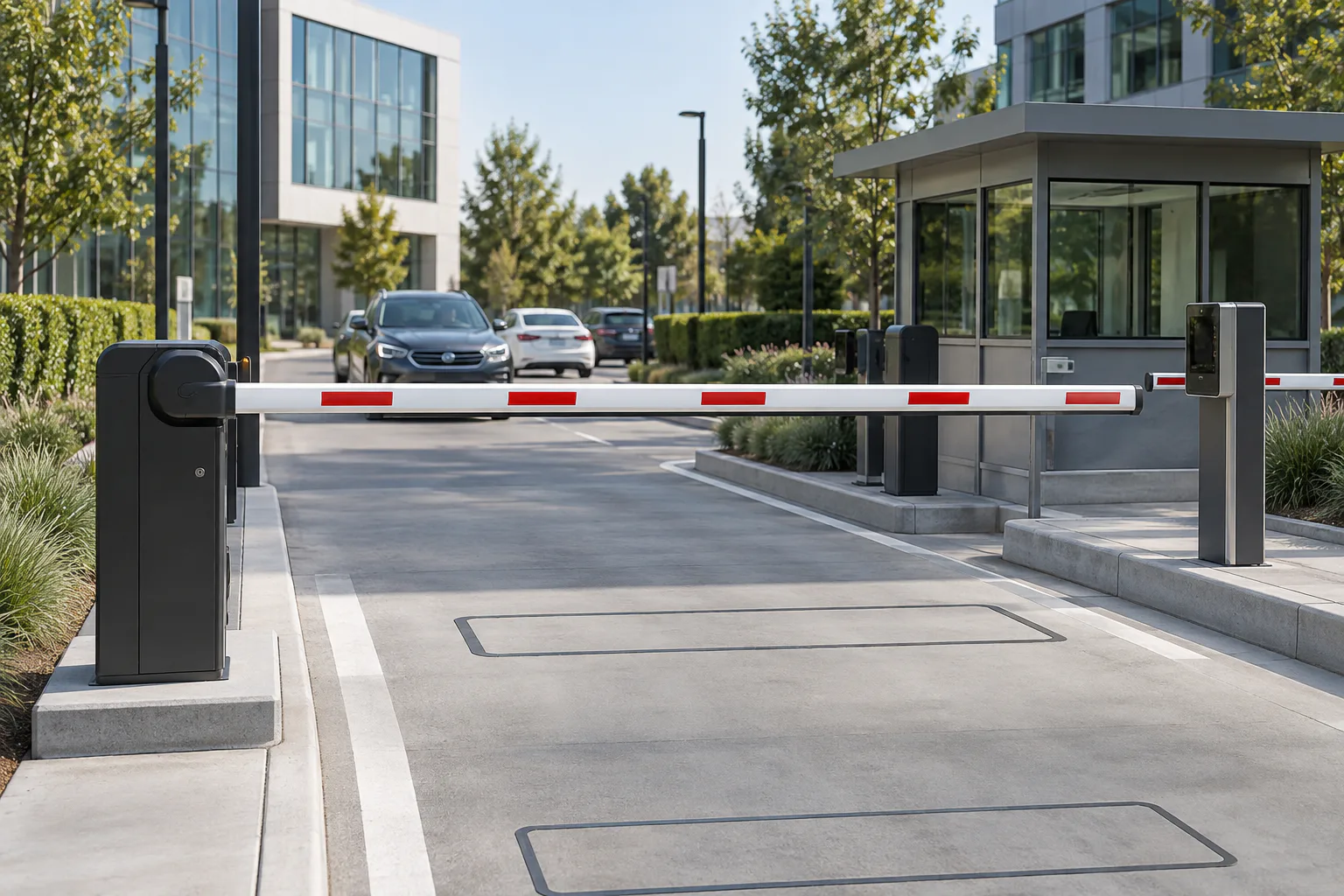
Vehicle detection loops prevent the barrier from rising under a vehicle. Their positions are set together with traffic flow and the control scenario. Audible and visual warnings inform drivers about barrier movement.
4. Control scenarios
- Plate recognition and authorised vehicle lists
- Card access or remote control
- Push-button control from the guard booth
- Emergency fast operation (EFO) and emergency lowering
These scenarios directly affect infrastructure cabling and control panel selection.
5. Power and hydraulic unit
The location of the hydraulic unit, its distance from the body and the power supply are defined in the project. Long line distances can affect hydraulic performance.
Planning checklist
- Model type (fixed / shallow-mount) and excavation depth
- Drainage connection
- Loop positions and warning systems
- Control scenario and integrations
- Maintenance access and emergency procedure