

Product system
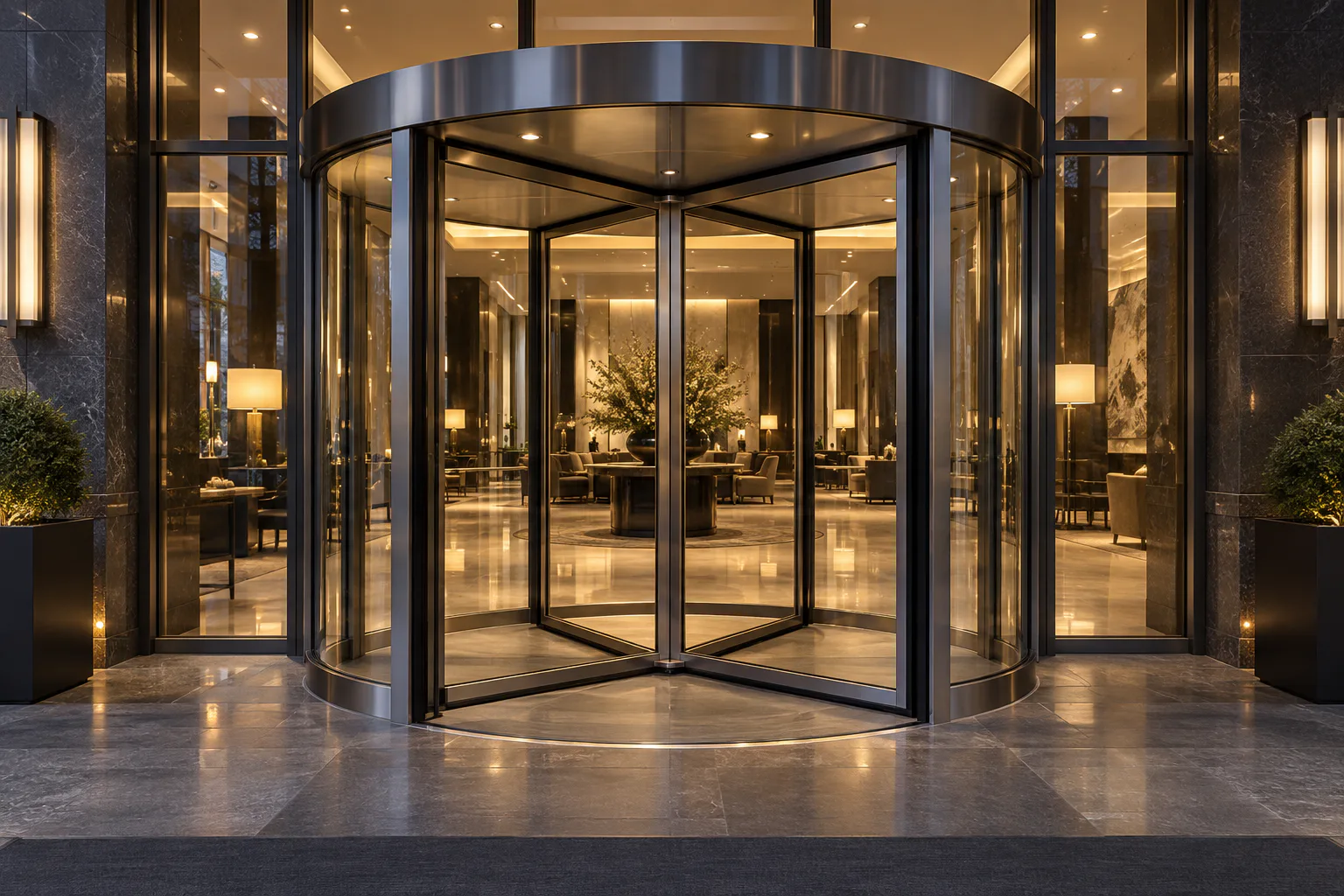
Revolving Door
Balancing energy, flow and prestige at busy entrances.
System approach
How does a revolving door work?
Revolving doors limit airflow between inside and outside while providing continuous, orderly pedestrian passage. They can be designed as manual or sensor-controlled automatic systems.
01
Advantages
- Energy efficiency through the air-lock effect
- Uninterrupted pedestrian flow
- Prestigious architectural appearance
- Protects indoor comfort
02
Applications
- Hotels and residences
- Malls and business centres
- Airports
- Public and healthcare buildings
03
Technical structure
- Manual or automatic operation
- Glass, aluminium and stainless steel construction
- Diameter and passage width per project
- Adjustable rotation speed
04
Safety
- Approach and safety sensors
- Controls that reduce the risk of trapping
- Emergency scenarios
- Controlled speed management
Automation and options
Configure the system for your building.
- LED lighting01
- Different finishes and RAL colours02
- Access control03
- Night locking options04
Maintenance and service
Service details We protect performance long after installation.
Expert service for fault diagnosis, sensor adjustment, motor and control board checks, mechanical repair, spare parts and periodic maintenance.
Frequently asked questions
What is the difference between automatic and manual revolving doors?
The automatic system starts with a sensor and adds comfort in heavy traffic; the manual system is operated by the user.