



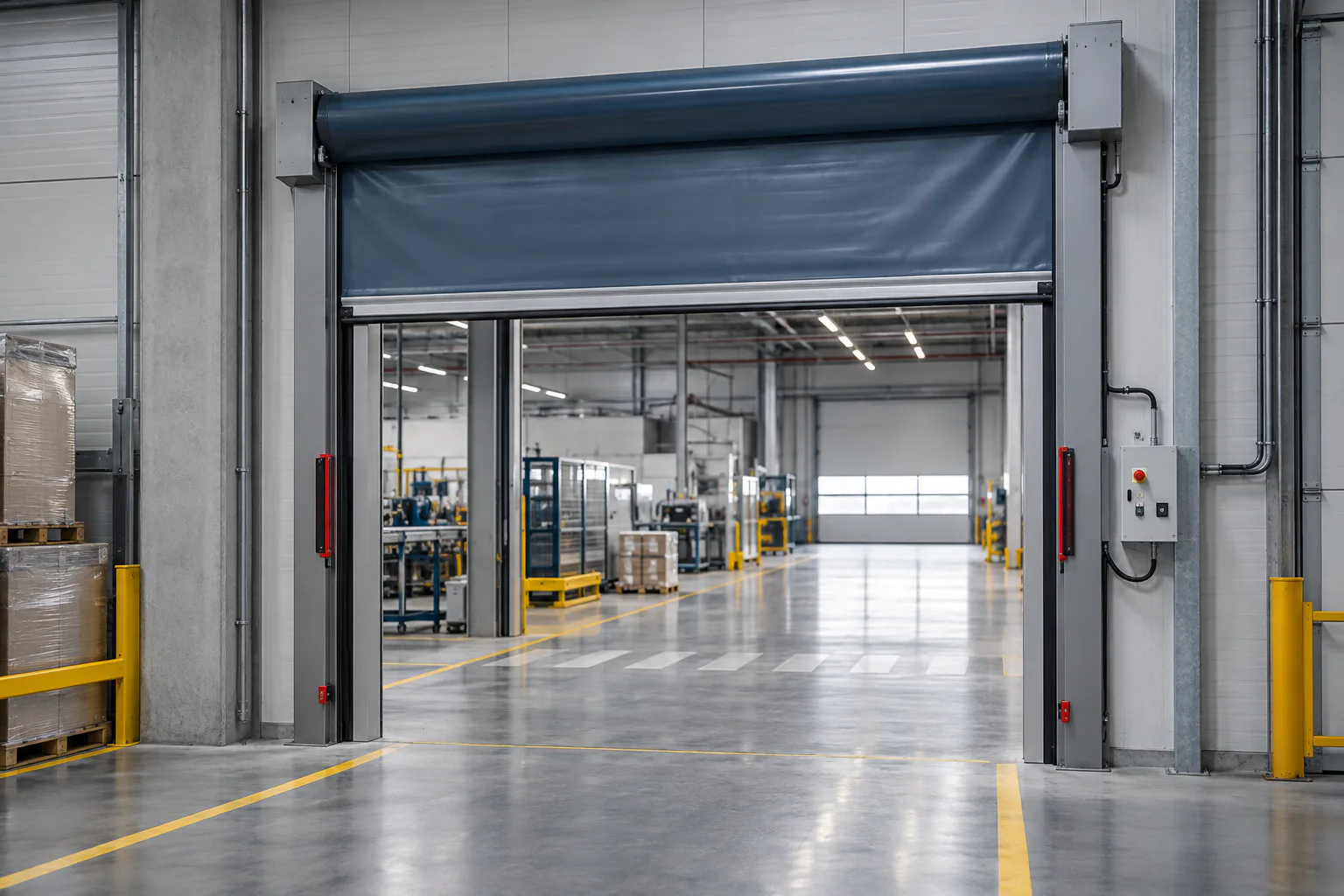
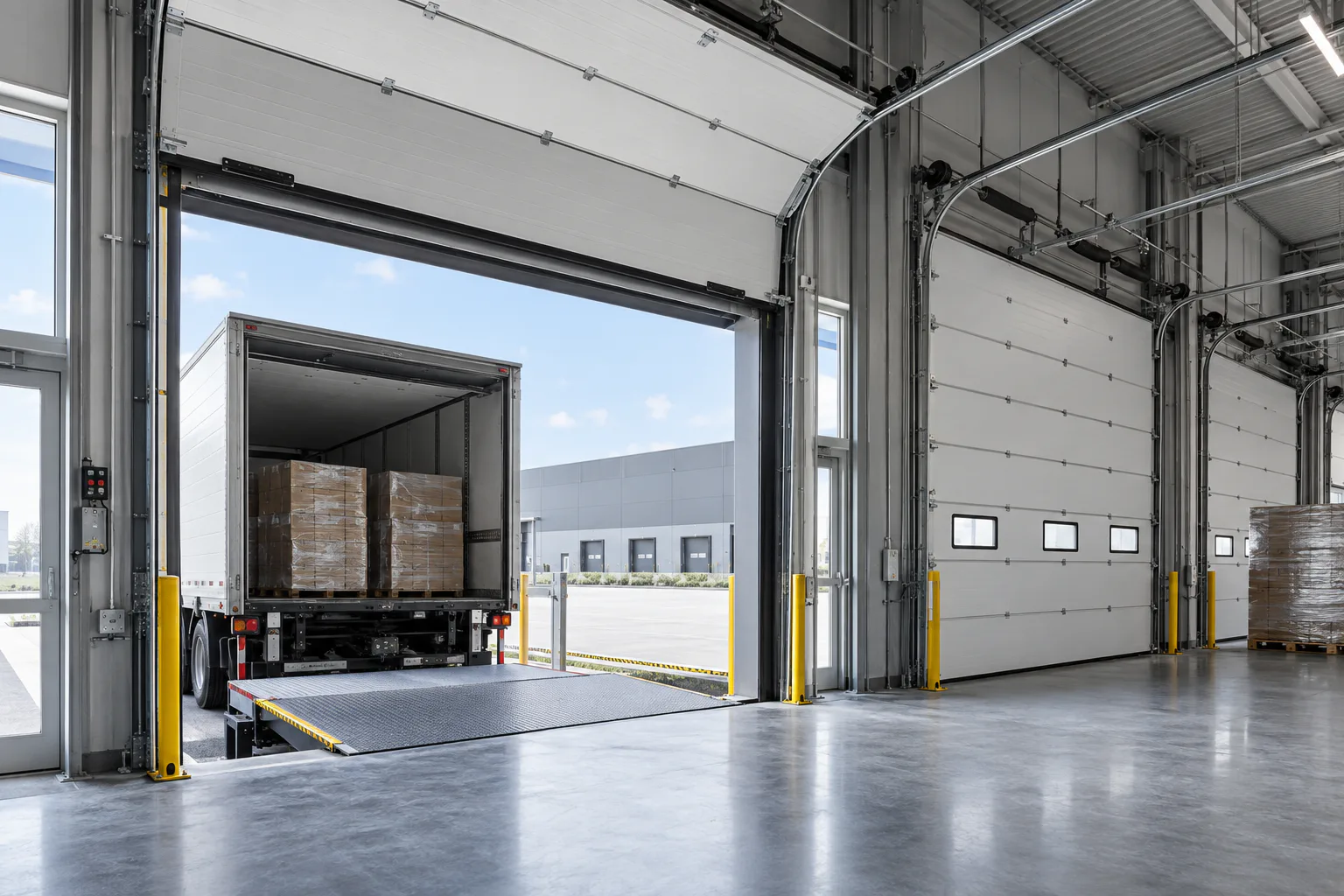


Industrial door maintenance is the regular inspection of motors, mechanical parts and safety systems on sectional, high-speed PVC and loading doors. The goal is to prevent unplanned failures that stop production and logistics.
Why planned maintenance?
Doors in loading and production areas operate hundreds of times a day. A small misalignment can grow into major motor and mechanical failures over time. Planned maintenance catches faults early, shows spare part needs in advance and reduces safety risks.
Checkpoints
- Motor and gearbox running noise and heat
- Spring, cable and track tension; pulley wear
- Safety sensors and photocell alignment
- Bottom-edge safety system and safety edge
- Control board, connections and emergency stop
- Damage to the curtain or panels, seals and insulation
By door type
Sectional doors: spring life and cable condition are critical; a broken spring unbalances the door. High-speed PVC doors: curtain seating in the guide, the bottom-edge sensor and acceleration/deceleration settings are checked. Loading doors: the door’s movement is reviewed together with dock leveller and shelter integration.
Maintenance interval
It depends on traffic. More frequent checks in shift-operated facilities noticeably reduce unplanned downtime. Every service visit should record the work done and parts replaced.
Daily operator checks
- Any unusual noise during movement?
- Is the photocell clean and unobstructed?
- Is the emergency stop button accessible?